Jan 30, 2025
  16 Min Read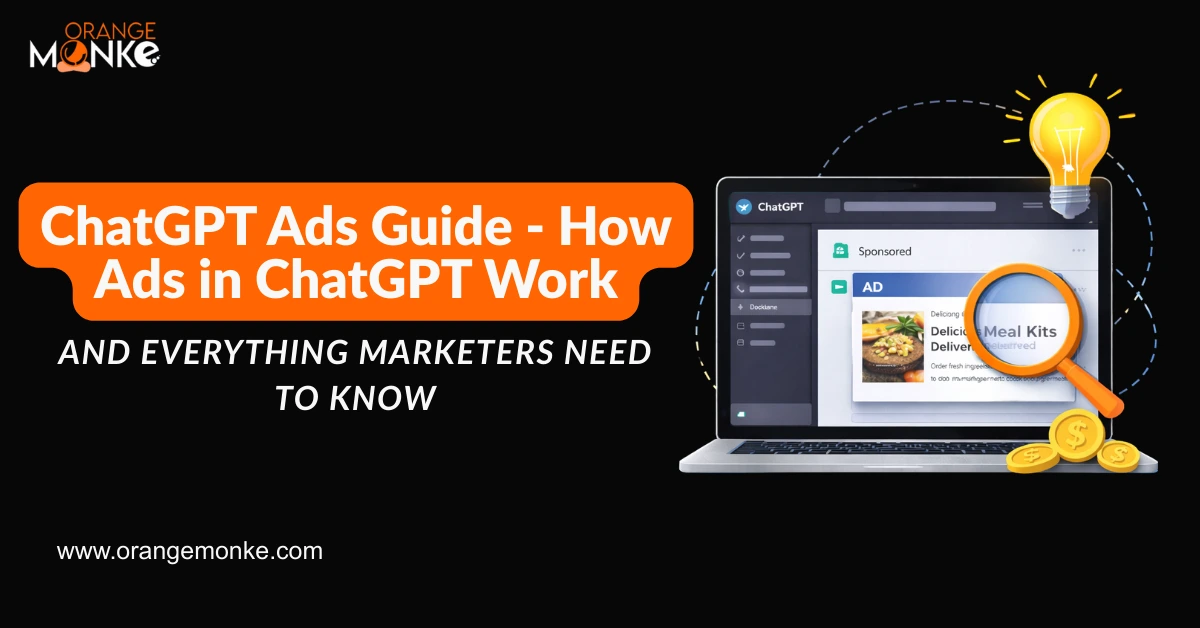
How ChatGPT Is Changing the Advertising LandscapeAI is revolutionizing marketing, and ChatGPT is at the forefront. Unlike traditional advertising platforms, it enables conversational, intent-driven interactions where users receive helpful, AI-generated answers. The ChatGPT ads platform integrates Ads in ChatGPT seamlessly into these conversations, delivering contextual, privacy-first, and highly relevant promotions clearly labeled as “Sponsored.” Understanding how Ads in ChatGPT work is essential for marketers to engage audiences naturally, leverage semantic insights, and stay ahead in the world of AI-powered advertising. |
Ever wondered how brands might advertise inside ChatGPT without interrupting the conversation? If you’re a marketer, digital agency, or SaaS company, this is something you can’t afford to ignore. ChatGPT Ads are emerging as a completely new way to reach users, right where they’re asking questions and seeking solutions.
Unlike traditional ads that pop up everywhere, ChatGPT Ads appear naturally within AI-generated responses. They’re helpful, relevant, and non-intrusive, giving users exactly what they need without feeling “sold to.”
But how can your brand stand out when AI decides which ads to show?
Even though there isn’t a public ChatGPT ads platform yet, understanding how these ads work now gives you a serious first-mover advantage. In this guide, we’ll break down everything you need to know about ChatGPT Ads, why they matter, and how marketers can get ready for this AI-driven advertising revolution. By the end, you’ll have the insights to position your brand smartly for 2026 and beyond.
What Are ChatGPT Ads?
ChatGPT ads are advertisements shown inside AI-generated responses. Unlike traditional display ads or search engine ads, ChatGPT ads appear directly within conversations when relevant to a user’s query.
Key Features of Ads in ChatGPT:
- ChatGPT ads are clearly labeled as “Sponsored”
- These are not random ads but contextually relevant to the user’s question
- Non-intrusive and separate from ChatGPT’s main answers
- Privacy-first, with no personal data shared with advertisers
Example of Ads in ChatGPT
A user asks:
“Which is the best digital marketing agency for small businesses?”
ChatGPT might provide an unbiased answer:
“There are several agencies that specialize in small business marketing, including HubSpot Agency Partners, Orange MonkE, LYFE Marketing, and WebFX. The best choice depends on your budget, goals, and the services you need.”
At the end, a sponsored ad may appear:
Sponsored: “Grow your business with Orange MonkE – Expert digital marketing solutions for small businesses. Book a free consultation today!”
This format ensures the ad is:
- It shows helpful ads that are directly relevant to the user’s query
- It is Non-intrusive as it appears naturally after the answer
- Further, it offers an engaging and clear call-to-action
What Makes ChatGPT Ads Different and Trustworthy
OpenAI has designed ChatGPT ads with user experience and trust at the core. Every ad is guided by principles that ensure advertising aligns with helpfulness, privacy, and long-term value.
Here’s a closer look at what makes ChatGPT ads different from traditional advertising:
1. Mission Alignment
OpenAI’s mission is to ensure that artificial general intelligence (AGI) benefits all of humanity. Advertising inside ChatGPT is not about maximizing revenue—it’s about supporting this mission.
- Ads are intended to enhance user experience by providing relevant solutions, products, or services.
- Example: A user asking for project management tools might see a sponsored suggestion for a trusted software, directly aiding decision-making without disrupting the AI’s guidance.
- Every ad is vetted to ensure it supports the goal of accessibility and helpfulness.
2. Answer Independence
One of the biggest concerns with AI ads is bias. OpenAI ensures that:
- Ads do not influence ChatGPT’s answers.
- Responses remain accurate, neutral, and helpful, regardless of sponsorship.
- Ads are always separate and clearly labeled, so users can distinguish between content and promotion.
This guarantees that users can trust the information they receive, even when ads are present.
3. Conversation Privacy
Your privacy is paramount. ChatGPT ads are designed with strict confidentiality measures:
- Advertisers never have access to your conversations.
- OpenAI does not sell or share your data for advertising purposes.
- Data used to optimize ads is aggregated and anonymized, ensuring individual conversations remain private.
This makes ChatGPT ads one of the most privacy-conscious advertising platforms currently available.
4. Choice & Control
Users maintain full control over their ad experience:
- Personalization can be turned on or off at any time.
- You can clear the data used for ad personalization whenever you choose.
- OpenAI offers a paid, ad-free tier, giving users the freedom to enjoy ChatGPT without sponsored content.
This ensures that advertising is optional, not intrusive, and respects user preferences.
5. Long-Term Value
Unlike traditional platforms, ChatGPT is not designed to maximize screen time or clicks. Instead, OpenAI focuses on user trust and experience:
- Ads are helpful, relevant, and non-intrusive, avoiding spammy or manipulative techniques.
- The goal is long-term user satisfaction, not short-term revenue.
- By prioritizing helpfulness, OpenAI ensures that users continue to see ChatGPT as a trusted assistant, even with ads.
6. Transparency & Accountability
OpenAI emphasizes full transparency about how ads work:
- Every sponsored message is clearly labeled.
- Users can learn about ad policies and principles directly from OpenAI.
- This builds a foundation of trust between users, advertisers, and the platform.
7. Ethical Advertising Standards
ChatGPT ads adhere to strict ethical guidelines:
- No deceptive or misleading ads
- No targeting based on sensitive personal data
- Prioritization of high-quality, relevant offers over revenue-driven spam
These standards make ChatGPT ads a new benchmark for responsible AI advertising.
How Do ChatGPT Ads Work?
ChatGPT ads are a new type of conversational advertising, and while the system is still in experimental phases, the underlying mechanism is straightforward. Here’s a deeper look at how it works:
Step 1: Understanding User Intent
Everything begins with the user. When someone asks a question or types a query, ChatGPT analyzes the intent behind the question. Unlike keyword-based systems used in search engines, ChatGPT uses natural language understanding to interpret what the user truly wants. This ensures that any advertising shown is relevant and contextually appropriate.
Example: If a user asks, “Best project management tools for small teams?”, ChatGPT recognizes that the user is seeking software recommendations for team productivity, not general information.
Step 2: Generating a Neutral, Helpful Response
ChatGPT then generates an answer to the user’s question. Importantly, this response is completely independent of any advertising.
- The AI focuses solely on providing the most helpful, accurate, and contextually appropriate information.
- Sponsored messages do not influence the content of the answer, ensuring that the user’s experience remains trustworthy and unbiased.
Step 3: Displaying Sponsored Suggestions
If the system detects that a relevant sponsored message exists, it may display a clearly labeled ad at the end of the response.
- Ads are always marked as “Sponsored”.
- They are contextual and intent-driven, meaning they are shown only when they closely match the user’s question or needs.
- The ad is designed to enhance the user’s decision-making, rather than interrupt or distract.
Example: After answering the project management question, a sponsored suggestion might appear:
Sponsored: “Try Asana – Free plan available for small teams.”
Step 4: Maintaining Privacy
User privacy is a top priority in ChatGPT advertising. OpenAI ensures that individual conversations are never shared with advertisers, and all ads are generated using only aggregated and anonymized data. No personal user information is sold, stored, or used for targeting purposes.
This privacy-first approach ensures that advertising within ChatGPT remains secure, ethical, and trustworthy, making it a much safer alternative compared to many traditional digital advertising platforms.
Why ChatGPT Ads Are Different from Traditional Advertising
You’ve probably noticed plenty of online ads that feel intrusive, irrelevant, or even annoying, ChatGPT Ads work completely differently. They appear only when truly relevant to what you’re asking, fit naturally into the conversation, and respect your privacy.
Think of them as helpful suggestions rather than pushy promotions—making the user experience smoother, smarter, and more user-friendly.
Contextual Ads in ChatGPT
Unlike traditional advertising that relies on keywords, ChatGPT Ads are shown based on the actual meaning and intent of a conversation. This ensures that ads appear only when they closely match what the user is looking for, making them far more relevant and useful than standard display or search ads.
Advanced Semantic Understanding
The AI behind ChatGPT interprets the full context of a user’s query. Instead of simple keyword matching, it analyzes questions deeply to understand what the user truly needs. This leads to more accurate ad placement and higher-quality interactions.
Higher Relevance and Precision
Contextual alignment ensures that ads are displayed only when highly relevant. Users see promotions that directly relate to their problem or question, eliminating random or irrelevant advertising and improving overall satisfaction.
High Engagement Potential
Because ChatGPT Ads appear only when the system predicts strong relevance, they naturally attract attention. Users are more likely to click, explore, or take action—without feeling pressured or interrupted.
Privacy-First Advertising
OpenAI ensures that user privacy is central to ChatGPT Ads. Advertisers do not have access to individual conversations, and no personal data is sold or tracked for targeting. Ads are displayed based on query context, not user behavior, making them a safer and more ethical advertising option.
Conversation-Based, Non-Intrusive Experience
Ads integrate seamlessly into AI-generated responses. There are no banners, pop-ups, or forced interruptions. Every sponsored message is clearly labeled as “Sponsored”, so users can easily distinguish between organic AI responses and promotional content.
Intent-Driven Rather Than Behavior-Driven
ChatGPT Ads focus on the immediate intent behind a question rather than tracking personal behavior or browsing history. This approach ensures that advertising remains relevant, ethical, and privacy-conscious.
Better Trust and Transparency
With clear labeling, context-driven placement, and privacy-first principles, ChatGPT Ads build trust with users while delivering highly relevant, helpful content. Brands can reach audiences without compromising credibility or user experience.
How Marketers Can Prepare for ChatGPT Ads
ChatGPT Ads are still in early testing, but marketers who plan ahead can gain a first-mover advantage. Once OpenAI launches a full ChatGPT ads platform, businesses will be able to manage campaigns, set budgets, and run contextual AI-driven ads seamlessly.
Here’s how you can prepare your marketing strategy for this emerging platform.
1. Understand Conversational User Intent
Unlike search engines, where users type isolated keywords, ChatGPT interprets natural language queries. This means marketers need to think about how people ask questions in conversation, not just what keywords they use.
Focus on problem-solving queries like “best SEO tool for small business” rather than generic terms. Map your products or services to specific user intents, so your future ads align naturally with conversations.
Tip: Create a list of 50–100 high-intent questions your target audience might ask and start optimizing your content around these queries. This builds a foundation for AI-friendly ad campaigns.
2. Optimize Your Content for AI-Advertising
Since ChatGPT Ads appear in the context of conversations, your content must match the user’s intent. Make sure it answers questions clearly and directly. Structured content formats—like FAQs, step-by-step guides, and numbered lists—make it easier for the AI to reference your information. Always include clear calls-to-action (CTAs), so users know what to do after seeing your ad or landing page.
Tip: Create content around “how-to” or comparison queries (e.g., “Top 5 Project Management Tools for Small Teams”) to increase the chances of your content being surfaced alongside AI recommendations.
3. Audit Your Website for AI Traffic
When ChatGPT Ads start driving traffic, your website must be ready to convert visitors into leads or customers. Ensure your site loads quickly and is mobile-friendly, and optimize pages for clarity, readability, and user experience. Make conversion points—like contact forms, free trials, or demo bookings—prominent and actionable.
Tip: Even if AI-driven ads generate fewer clicks than search engines, focus on quality over quantity. Track each high-intent visitor carefully and optimize for conversions rather than just traffic.
4. Prepare AI-Friendly Landing Pages
Landing pages for users coming from ChatGPT should be concise, clear, and directly related to the query. Highlight benefits immediately, as users from AI searches are often looking for fast, actionable solutions. Incorporate trust signals like reviews, testimonials, or awards to boost credibility.
Tip: Keep landing page content short and scannable, using headings, bullet points, and CTAs to ensure AI-driven users quickly understand the value proposition.
5. Monitor Emerging Trends in AI Queries
The ChatGPT ecosystem is evolving rapidly, so staying ahead requires monitoring trends in AI-driven queries. Track the types of questions users ask about your niche, and use SEO and analytics tools to identify shifts from traditional search to conversational AI queries.
Tip: Set up alerts for trending topics in your industry and create content around these questions to position your brand as a first-choice resource when ads are displayed.
6. Build Conversational AI marketing
In AI-driven environments, trusted brands are more likely to be recommended. Even before ChatGPT Ads are widely available, it’s crucial to develop authoritative content that aligns with user questions. Engage in thought leadership and maintain consistent branding across channels.
Tip: Publish regular blog posts, guides, or case studies on topics your audience cares about. AI platforms are more likely to surface content from brands recognized as experts.
7. Plan for Testing and Iteration
Since ChatGPT Ads are new, early campaigns will require experimentation. Test different ad copy styles, whether instructional, helpful, or conversational. Monitor click-through and conversion metrics, and adjust landing pages and messaging based on user behavior.
Tip: Start small with test campaigns, measure results carefully, and iterate quickly. Even minor changes in ad copy or landing page layout can significantly impact performance in this new platform.
8. Align Ads With Ethical and Privacy Standards
OpenAI prioritizes privacy, transparency, and helpfulness, and your campaigns should do the same. Avoid misleading or manipulative messaging, focus on offers that are genuinely useful, and respect user privacy in personalization and targeting.
Tip: Always disclose sponsored content clearly and avoid targeting tactics that could compromise trust. Ethical campaigns are more likely to succeed long-term in AI-driven environments.
Challenges & Limitations of ChatGPT Ads
ChatGPT Ads are an exciting innovation in AI-powered marketing, offering a new way to connect with users in a conversational, intent-driven environment.
However, like any emerging platform, they come with unique challenges and limitations that marketers should be aware of. Understanding these constraints can help you prepare strategically, set realistic expectations, and avoid common pitfalls.
- Limited Reach
Currently, ChatGPT Ads are in a pilot testing phase, meaning only a small subset of users—primarily in the United States—can see them. Many accounts outside the U.S. do not display ads yet. Global availability is expected to expand gradually, but early campaigns may not generate the same traffic volume as traditional ad platforms.
Implication for marketers: While reach is limited, early adopters can gain valuable insights through testing and learning. Campaigns should be measured with realistic expectations to make the most of the available audience.
Tip: Focus on high-intent queries and targeted campaigns to maximize impact within the limited reach.
- Experimental Nature
ChatGPT Ads are still evolving, and OpenAI is continuously refining ad formats, placement, and targeting options. Performance metrics are not yet standardized, making it challenging to calculate ROI accurately. Some users may not engage with ads at all, as the experience is intentionally non-intrusive.
Implication for marketers: Flexibility is key. Be ready to test, iterate, and adjust campaigns based on performance data as the platform evolves.
Tip: Start small, test different ad copy styles, and track engagement trends carefully to identify what resonates with your audience.
- Limited Analytics
Unlike platforms like Google Ads or Meta Ads, ChatGPT currently provides minimal reporting and analytics. Advertisers may not have detailed insights into impressions, click-through rates, or conversion metrics, making it harder to optimize campaigns effectively.
Tip: Use tracking tools on your landing pages to measure AI-driven traffic separately from other channels. This ensures you can still analyze performance even without robust native analytics.
- User Behavior Differences
Users on ChatGPT are interacting in a conversational context, not browsing or searching like traditional platforms. Many may be seeking information first and are not ready to purchase immediately. Ads must therefore be highly relevant and contextually useful, or they risk being ignored.
Implication for marketers: Ad copy and offers must align with conversational intent and provide immediate value. Focus on solution-oriented messaging rather than generic promotions.
- Regional & Account Restrictions
Currently, ChatGPT Ads are shown only to free-tier users or specific test groups. Paid subscriptions—such as Plus, Pro, or Enterprise—are ad-free, meaning a large portion of engaged users may not see your campaigns. This creates uneven reach across different audience segments.
Implication for marketers: Consider regional and subscription-based visibility when planning campaigns, and tailor expectations accordingly.
- Creative & Format Constraints
ChatGPT Ads differ from traditional display or search ads, appearing within AI-generated responses instead of banners or search listings. The format is concise, so marketers must craft messaging that is clear, attention-grabbing, and directly relevant.
Tip: Focus on solution-oriented copy with a clear call-to-action. Short, conversational messages tend to perform better than overly promotional content.
- Ethical and Privacy Considerations
OpenAI prioritizes user trust and privacy, which limits certain targeting methods. Ads cannot rely on invasive tracking or personal data, and marketers must ensure campaigns are helpful and ethical. While this approach builds trust, it can reduce some targeting capabilities available on other platforms.
Implication for marketers: Respecting privacy is crucial. Ads must provide genuine value, avoiding manipulative tactics, which ultimately enhances brand credibility and long-term effectiveness.
Conclusion
ChatGPT Ads are opening up a whole new way to reach users—right inside the conversations they’re having with AI. Unlike traditional ads, these are context-driven, privacy-first, and designed to be helpful rather than pushy. While the platform is still in early stages, marketers who start preparing now can gain a valuable first-mover advantage.
At Orange MonkE, we specialize in helping businesses maximize their digital presence through PPC campaigns, SEO, and performance-driven digital marketing strategies. By understanding user intent, crafting AI-friendly content, and designing campaigns tailored to emerging platforms like ChatGPT, we ensure your brand reaches the right audience at the right time.
The future of advertising is conversational—and the brands that act now will lead the way.
Frequently Asked Questions
What are ChatGPT Ads?

ChatGPT Ads are sponsored messages that appear inside AI-generated responses. These ads are shown based on the context of a user’s question and are clearly labeled as “Sponsored.” Unlike traditional ads, they are conversational, relevant, and non-intrusive.
How do ChatGPT Ads work?
ChatGPT Ads work by understanding user intent. When a user asks a question, ChatGPT generates a helpful answer first. If a relevant advertiser is available, a clearly labeled sponsored suggestion may appear at the end of the response. The main answer always remains unbiased and independent of advertising.
Can I buy ads on ChatGPT right now?
At the moment, ChatGPT Ads are in a limited testing phase. There is no public self-serve platform available yet for all advertisers. OpenAI is gradually rolling out advertising features, and wider access is expected in the future.
Is there a ChatGPT Ads Manager platform?
Currently, there is no official ChatGPT Ads Manager like Google Ads or Meta Ads. OpenAI has not yet launched a public dashboard where businesses can directly create and manage ChatGPT ads.
How to buy ads on ChatGPT?
Right now, businesses cannot directly purchase ChatGPT Ads through a public system. Once officially launched, advertisers can create an advertiser account, select campaign objectives, add conversational ad copy, set budgets and launch contextual AI-based campaigns. This process is expected to be similar to other digital ad platforms.
Who can advertise on ChatGPT?
At present, only selected advertisers in pilot programs have access to ChatGPT advertising. In the future, it is expected that businesses of all sizes—especially SaaS brands, service providers, and eCommerce companies—will be able to run ads on ChatGPT.
Where do ChatGPT Ads appear?
Ads in ChatGPT appear directly inside conversations. They do not interrupt the response. Instead, they show up at the end of relevant answers as clearly labeled sponsored suggestions.
Are ChatGPT Ads personalized?
ChatGPT Ads are privacy-first. Advertisers do not receive access to individual conversations, and user data is not shared. Ads are shown based on query context rather than personal tracking.
What is the cost of advertising on ChatGPT?
As of now, there is no publicly available pricing model for ChatGPT Ads. It is expected that future pricing may be based on Cost-per-click (CPC), Cost-per-impression (CPM) and Performance-based models. More clarity will come once OpenAI officially launches the ad platform.
What types of businesses should use ChatGPT Ads?
ChatGPT Ads are ideal for Digital marketing agencies, SaaS companies, Online tools and software, Education platforms, Service-based businesses and E-Commerce brands. Any business that benefits from intent-based discovery can gain value from ChatGPT advertising.
Are ChatGPT Ads better than Google Ads?
ChatGPT Ads are different from Google Ads. While Google Ads are keyword-based, ChatGPT Ads are intent-based and conversational. They focus more on helping users make decisions rather than pushing traditional promotional messages.
Will ChatGPT Ads replace search engine advertising?
No, ChatGPT Ads will not replace search ads. Instead, they will complement platforms like Google Ads by offering a new way to reach users who prefer conversational AI over traditional search engines.
Are ChatGPT Ads available worldwide?
Currently, ChatGPT Ads are being tested mainly in the United States. Global availability is expected to expand gradually as OpenAI refines the advertising system.