
 May 26, 2026
  14 Min Read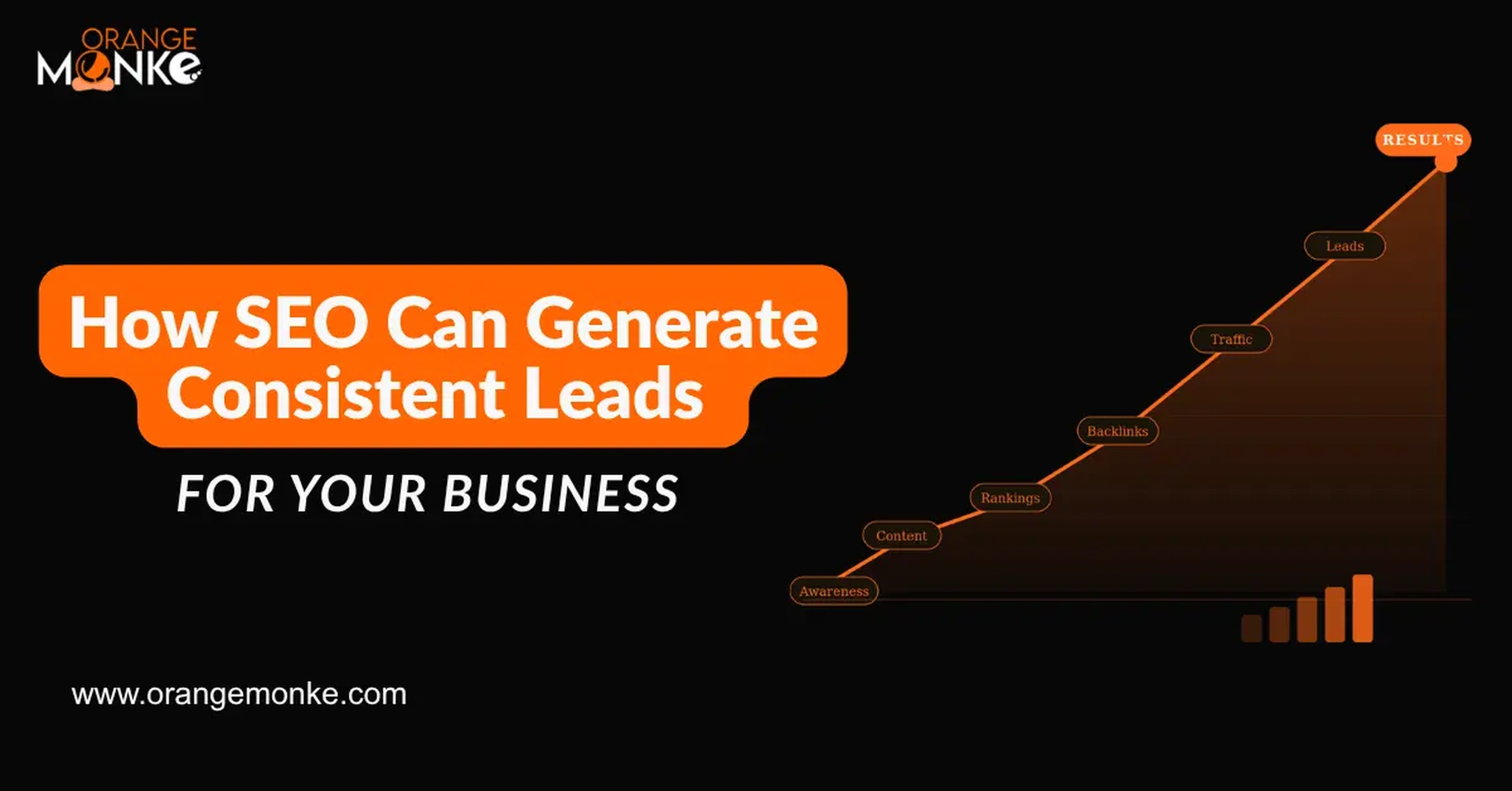
| SEO lead generation helps businesses generate consistent leads by attracting qualified organic traffic from search engines. By targeting high-intent keywords, optimizing content for search intent, and improving technical SEO, businesses can turn website visitors into customers without relying heavily on paid ads.
Effective SEO lead generation strategies include long-tail keyword targeting, content marketing, internal linking, local SEO, and conversion-focused landing pages. Businesses using SEO for lead generation can improve online visibility, build trust, increase organic traffic, and generate high-quality leads over the long term. Whether for local businesses or B2B companies, a strong SEO strategy helps drive sustainable organic lead generation, higher search rankings, and measurable business growth through consistent inbound traffic. |
If you’ve ever wondered why some businesses seem to attract a steady stream of ready-to-buy customers without constantly running ads or cold-calling prospects, the answer is almost always the same: they’ve mastered SEO lead generation.
Unlike paid advertising that stops delivering the moment your budget dries up, a well-executed SEO strategy works around the clock. It puts your business in front of the right people, at the right moment, when they’re actively searching for exactly what you offer.
In this guide, we’ll break down exactly how SEO generates leads, what strategies actually move the needle. So, whether you’re a small business or a B2B company chasing enterprise contracts, let’s begin!
What Is SEO Lead Generation?
SEO lead generation is the process of using search engine optimization to attract potential customers to your website and guide them toward a meaningful action, filling out a form, booking a call, downloading a resource, or making a purchase.
It’s different from just “getting traffic.” A lot of businesses obsess over pageviews and rankings without asking the more important question: are those visitors actually becoming leads?
True SEO lead generation is about qualified intent. When someone searches for “best CRM software for small businesses” or “how to reduce warehouse delivery delays,” they’re not browsing aimlessly. They have a problem. They’re looking for a solution. Your job is to show up with the answer — and then earn their contact information or their business.
This approach sits at the heart of organic lead generation: no paid clicks, no cold outreach. Just the right content meeting the right person at the right time.
How Does SEO Generate Leads?
Here’s how SEO generates leads, step by step:
Step 1: A potential buyer types a search query
They’re looking for information, a comparison, a solution, or a vendor. They have intent.
Step 2: Your content ranks in search results
Because you’ve optimized your pages for the keywords they’re using, your site appears on page one.
Step 3: They click through to your content
Your title and meta description convinced them your page would answer their question.
Step 4: Your content builds trust
You provide genuinely useful, expert-level information that answers their question completely.
Step 5: You offer the next step
A lead magnet, a free trial, a demo booking, a contact form — something that moves them from “visitor” to “lead.”
Step 6: They convert
They give you their contact information or take a commercial action.
Step 7: The cycle compounds
As more people visit and engage with your content, your rankings improve. Better rankings bring more traffic. More traffic brings more leads. This compounding effect is why consistent leads from SEO are so powerful compared to paid channels.
The key distinction: paid ads rent you an audience. SEO builds one.
Why SEO Is One of the Best Ways to Generate High-Quality Leads Online
Not all traffic is created equal, and this is where SEO genuinely outperforms most other channels when it comes to lead quality.
High commercial intent
People using search engines to find solutions are much further along in the buying journey than someone who saw your Instagram ad while scrolling on autopilot.
Cost efficiency over time
Yes, SEO requires upfront investment — content creation, technical work, link building. But unlike paid ads, a well-optimized page can generate qualified leads for years without additional spend per click.
Credibility and trust
Buyers instinctively trust organic search results more than paid placements. Appearing at the top of Google signals authority.
Compounding returns
The content you publish today will keep working for you in six months, two years, five years — if it’s done right.
Audience self-qualification
The nature of the search means users self-select. Someone searching “enterprise HR software pricing” is not a curious bystander. They’re evaluating vendors. That’s an extraordinarily valuable person to get in front of.
For businesses asking how to get more leads online without blowing their marketing budget, SEO is the most scalable long-term answer.
The SEO Lead Generation Funnel: TOFU, MOFU, BOFU
One of the most important frameworks for SEO strategy for leads is aligning your content to the buyer’s journey. Think of it in three stages:
Top of Funnel (TOFU) — Awareness
At this stage, your prospect is problem-aware but solution-unaware. They’re searching broadly: “how to improve team productivity” or “what is demand forecasting.”
Your goal: Educate, build brand awareness, and capture email addresses through lightweight resources.
Content formats: Blog posts, how-to guides, educational videos, industry glossaries.
Example keywords: “how SEO generates leads,” “what is organic lead generation,” “ways to generate leads online”
Middle of Funnel (MOFU) — Consideration
Now they know what type of solution they need. They’re comparing options: “best project management tools for remote teams” or “HubSpot vs Salesforce for small business.”
Your goal: Demonstrate your expertise, prove your product solves their specific problem.
Content formats: Comparison pages, case studies, webinars, detailed feature guides, ROI calculators.
Bottom of Funnel (BOFU) — Decision
They’re ready to buy. They’re searching your brand name, asking about pricing, or looking for demos: “[your brand] pricing” or “book a demo [your product].”
Your goal: Remove friction. Make it effortless to convert.
Content formats: Pricing pages, demo booking pages, free trial landing pages, testimonial-heavy product pages.
The businesses that generate qualified leads with SEO consistently are the ones that have content at all three stages, not just top-of-funnel blog posts.
10 Proven SEO Lead Generation Tips to Drive Consistent Results
Generate high-quality leads with proven SEO strategies that improve search visibility, attract the right audience, and turn organic traffic into long-term business growth.
Tip 1: Target Long-Tail Keywords with Commercial Intent
Stop chasing head terms like “SEO” or “CRM software.” They’re too competitive and attract the wrong audience. Instead, go after long-tail phrases that signal buying intent: “best SEO tools for B2B lead generation” or “affordable CRM for real estate agents.”
These keywords have lower search volume but dramatically higher conversion rates because the person searching knows exactly what they want.
Tip 2: Build a Topic Cluster Architecture
Rather than publishing random blog posts, organize your content into pillar pages and topic clusters. A pillar page covers a broad topic comprehensively (e.g., “The Complete Guide to Lead Generation”), while cluster pages go deep on subtopics (e.g., “SEO Lead Generation Tips,” “Social Media Lead Generation,” “Email Lead Generation”).
This structure signals topical authority to Google and helps you rank for a wide range of related keywords.
Tip 3: Optimize Every Page for a Specific Search Intent
Every page on your site should answer one primary question for one specific type of searcher. Don’t try to make one page rank for fifteen different keywords. Understand the intent behind a query — informational, navigational, commercial, or transactional — and match your content format accordingly.
Tip 4: Place High-Converting CTAs Within Content
Don’t bury your call-to-action at the bottom of a 2,000-word article where only 20% of readers will see it. Embed contextually relevant CTAs within the content itself. A mid-article prompt to “Download our free SEO audit checklist” will convert far better than a footer button.
Tip 5: Create Genuinely Useful Lead Magnets
Gate high-value assets behind a simple form: industry reports, email templates, ROI calculators, checklists, or diagnostic tools. The lead magnet must directly match the intent of the page it appears on. A visitor reading your guide to B2B SEO lead generation should see an offer for a “B2B SEO Strategy Template” — not a generic newsletter signup.
Tip 6: Prioritize Technical SEO Fundamentals
If your site loads slowly, isn’t mobile-friendly, or has crawl errors, none of your content strategy will matter. Google won’t rank a broken site. Audit your Core Web Vitals regularly, fix broken links, ensure proper indexation, and compress images. Think of technical SEO as the foundation your entire lead generation engine sits on.
Tip 7: Build Authority with Strategic Link Building
Links from reputable websites are one of Google’s most important ranking signals. Guest posts on industry publications, digital PR, and creating genuinely linkable assets (original research, data studies, useful tools) are the most sustainable ways to earn high-quality backlinks.
Tip 8: Use Internal Linking to Guide Visitors Toward Conversion
When someone lands on your top-of-funnel blog post, don’t let them hit a dead end. Link naturally to your middle-of-funnel comparison content, then to your bottom-of-funnel pricing page. A thoughtful internal linking structure acts like a guided path through your sales funnel — built right into the content.
Tip 9: Optimize Your Meta Titles and Descriptions for Clicks
Your ranking is only half the battle. If your meta title is generic and your description doesn’t give searchers a reason to click, you’ll get impressions without traffic. Write compelling, specific meta copy that makes it obvious what the page contains and why it’s worth clicking.
Tip 10: Refresh and Update High-Performing Content Regularly
SEO isn’t a “publish and forget” game. Google favors fresh, up-to-date content. Review your top-performing pages every 6–12 months. Update statistics, add new sections, improve internal links, and re-optimize for new keyword opportunities. This alone can significantly boost rankings and, with it, lead volume.
B2B SEO Lead Generation: What’s Different?
B2B SEO lead generation operates differently from B2C because the buying cycle is longer, the decision-making committee is larger, and the stakes per conversion are higher.
A few key differences to keep in mind:
Longer keyword research cycles
B2B buyers do extensive research before talking to sales. They’ll read your blog, download your resources, watch your webinars, and compare you to competitors — all before filling out a single form. Your content needs to serve them across months, not minutes.
Job-title-level targeting
Think about who at a company makes the buying decision. A CFO searches differently than a Marketing Manager or an IT Director. Create content that speaks to each persona’s specific priorities and language.
Conversion actions look different
In B2C, “converting” might mean a purchase. In B2B, it often means booking a discovery call, requesting a proposal, or downloading a whitepaper. Design your conversion architecture accordingly.
Thought leadership matters more
In competitive B2B markets, companies buy from vendors they trust. Long-form, genuinely expert content, original research, in-depth case studies, executive interviews- builds the kind of authority that generates consistent inbound leads over time.
SEO Lead Generation for Small Business: Where to Start
SEO lead generation for small Local businesses doesn’t require a six-figure content budget. It requires focus and patience.
Step 1: Start with local SEO if you serve a geographic area
Claim and optimize your Google Business Profile. Build local citations. Earn reviews. For many small businesses, appearing in local search results for “plumber in [city]” or “wedding photographer near me” is a faster path to leads than competing nationally.
Step 2: Go niche, not broad
You won’t outrank established players for generic head terms. But you can absolutely dominate a very specific niche. If you’re a bookkeeper serving independent restaurants in Chicago, create content specifically for that audience. You’ll face far less competition and attract far more relevant leads.
Step 3: Publish consistently, even if slowly
One well-researched, genuinely helpful article per week beats ten shallow posts. Quality signals authority. Authority earns rankings. Rankings bring leads.
Step 4: Invest in conversion first
Before spending heavily on traffic, make sure your website is actually set up to convert visitors. Clear value proposition, fast load time, obvious CTAs, and social proof (testimonials, case studies) are prerequisites.
How to Convert SEO Traffic into Leads
Getting traffic is step one. Converting that traffic into actual leads is where most businesses fall short. Here’s how to close the gap:
Match your landing page to search intent
If someone clicked on a result for “how to reduce cart abandonment,” they should land on a page that directly addresses cart abandonment — not your homepage.
Reduce form friction
Every additional field on a form reduces conversions. For most top-of-funnel lead magnets, name and email are enough. Save the longer forms for higher-intent, bottom-of-funnel interactions.
Use exit-intent overlays strategically
When a user is about to leave your page without converting, a well-timed popup offering a relevant resource can capture 5–10% of what would otherwise be lost traffic.
Add live chat or a chatbot
Many visitors have specific questions that your content doesn’t fully answer. A chat widget that engages them before they bounce can dramatically increase lead capture rates.
Leverage social proof near your CTAs. A testimonial or case study result placed right next to your sign-up button removes hesitation. “Join 4,000+ marketers who use our toolkit” is more compelling than any headline you could write.
Common Mistakes That Kill Your SEO Lead Generation Results
Even businesses that invest heavily in SEO often sabotage their own lead generation efforts. Here are the most common traps:
Optimizing for traffic, not intent
Ranking for high-volume keywords that attract the wrong audience feels good on a dashboard but generates zero leads. Always ask: who is searching this, and what do they want?
No clear conversion path
If a visitor reads your article and doesn’t know what to do next, they’ll leave. Every piece of content needs a next step — whether that’s a related article, a lead magnet, or a contact form.
Publishing thin content
Short, superficial articles that don’t fully answer the user’s question won’t rank well and won’t build trust with readers. Depth and genuine helpfulness are non-negotiable.
Ignoring page speed
A one-second delay in page load time can reduce conversions by up to 7%. If your site is slow, you’re losing leads before they even read a word.
Neglecting mobile experience
Over half of all web traffic is mobile. A website that looks broken on a phone is hemorrhaging leads every single day.
Treating SEO as a one-time project
SEO is an ongoing practice, not a one-time setup. Algorithms change. Competitors publish new content. You need to consistently monitor, update, and improve.
How to Track and Measure Organic Lead Generation
You can’t improve what you don’t measure. Here’s what to track for a clear picture of your SEO lead generation performance:
Organic traffic by landing page
Which pages are driving the most visitors from search? Are those pages also generating leads?
Organic conversion rate
Of all the visitors arriving from organic search, what percentage take a conversion action? Break this down by page to find your best and worst performers.
Keyword rankings for commercial-intent terms
Track how your BOFU and MOFU keywords rank over time. Ranking improvements here are directly tied to lead volume.
Lead source attribution
Use UTM parameters and a CRM to track which specific pieces of content are driving leads that eventually become customers — not just leads.
Time to conversion
In B2B especially, a lead might visit your site multiple times before converting. Understanding this path helps you produce the right content at each touchpoint.
Tools like Google Analytics 4, Google Search Console, Ahrefs, Semrush, and HubSpot can give you a comprehensive view of how your organic lead generation efforts are performing.
Final Thoughts
SEO lead generation is one of the most sustainable and cost-effective ways to attract high-quality customers online. Unlike paid advertising, SEO continues working long after content is published, helping businesses build trust, visibility, and long-term organic growth. By targeting the right keywords, optimizing content for search intent, improving technical SEO, and creating clear conversion paths, businesses can consistently turn website traffic into valuable leads.
Whether you’re a startup, local business, or enterprise brand, investing in SEO means investing in a scalable lead generation system that compounds over time.
At Orange MonkE, businesses receive strategic SEO solutions focused not just on rankings, but on generating qualified leads, improving conversions, and driving measurable business growth through data-driven organic marketing strategies.
Frequently Asked Questions
How does SEO help generate leads for a business?

SEO helps businesses generate leads by improving visibility on search engines for keywords that potential customers actively search for. When optimized content ranks higher, it attracts qualified visitors who are more likely to contact the business, request services, or make a purchase.
Is SEO better than paid ads for lead generation?
SEO provides long-term lead generation benefits because organic rankings continue driving traffic without paying for every click. While paid ads offer immediate visibility, SEO builds sustainable traffic, credibility, and consistent leads over time at a lower long-term acquisition cost.
What type of SEO content generates the most leads?
Content targeting commercial and problem-solving keywords generates the highest-quality leads. Examples include service pages, comparison articles, case studies, industry guides, and solution-focused blogs that directly answer user questions and encourage visitors to take action or contact the business.
How long does SEO take to start generating leads?
SEO usually takes three to six months to show noticeable lead generation results, depending on competition, website authority, and content quality. Businesses that consistently publish optimized content and improve technical SEO often see stronger long-term organic growth and conversions.
Why is search intent important in SEO lead generation?
Search intent helps businesses understand what users actually want when searching online. Creating content that matches informational, commercial, or transactional intent improves rankings, increases engagement, and attracts visitors who are more likely to convert into qualified business leads.