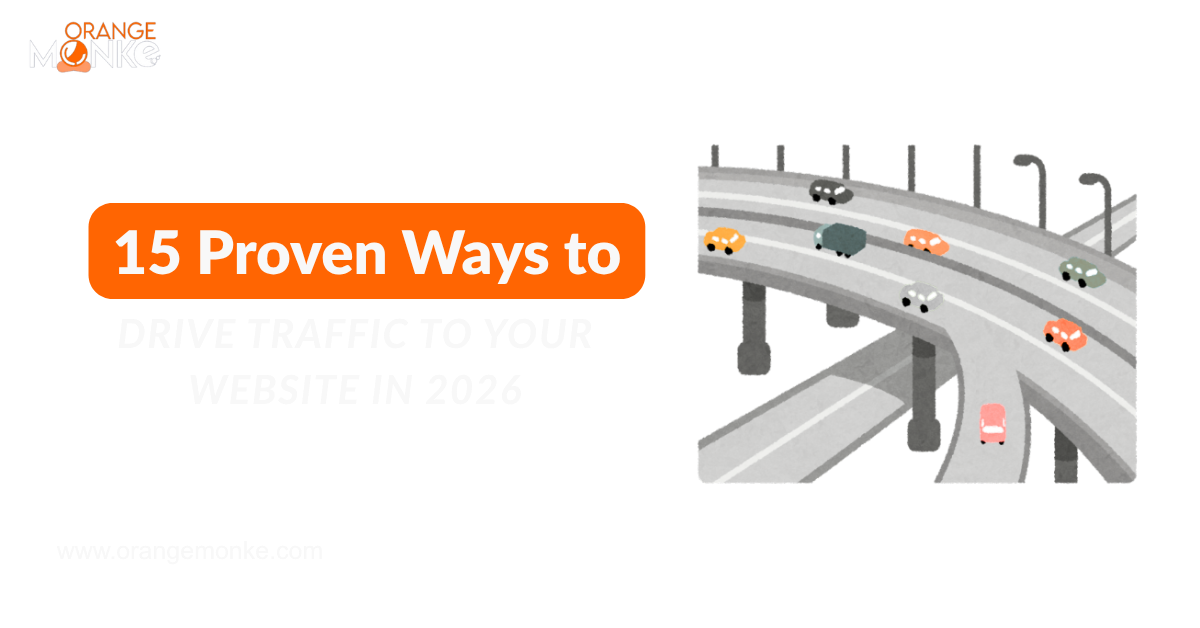
The Truth About How to Drive Traffic to Your Website in 2026
Three things have changed how website traffic actually works in 2026, and pretending they haven't is the fastest way to waste a budget.
One — AI search has cannibalized informational traffic. Google's AI Overviews, ChatGPT and Perplexity now answer a large share of basic questions before users click anything. The cost of writing thin "what is X" content has gone up; the value of original research, opinion and decision-stage content has gone up even more.
Two — short-form video has become a traffic source, not just a brand play. YouTube Shorts, Instagram Reels and TikTok now consistently send qualified clicks to websites when the creative is built for it. A year ago, this was experimental; today, it is table stakes for consumer brands.
Three — the cheapest traffic is the traffic you bring back. First-party email lists, retargeting audiences and SMS subscribers cost a fraction of what new acquisition costs. Most brands are still under-investing here.
With that context, here are the 15 tactics that actually drive traffic in 2026, what each one costs, how fast it works and when to use it.
The 4 Categories of Website Traffic (And Why They Matter)
Before picking tactics, know which type of traffic each one produces. Not all visitors are equal.
| Traffic Type | What It Means | Typical Conversion |
|---|---|---|
| Organic Search | Visitors from Google, Bing, AI search | 2-5% (highest intent) |
| Paid Search & Social | Visitors from Google Ads, Meta Ads, TikTok Ads | 1-4% (varies by intent) |
| Direct & Email | Visitors typing your URL or clicking your emails | 5-15% (warmest) |
| Referral & Social Organic | Visitors from other sites, posts, communities | 0.5-2% (cold but free) |
A site with 10,000 monthly visits from organic search will out-earn a site with 50,000 visits from cold social traffic almost every time. Volume is meaningless without intent.
SEO & Organic Tactics (1-5)
Organic Search — The Compounding Channel
Slow to start, hard to copy, highest long-term ROI. If you do nothing else, do this.
Target High-Intent Keywords (Not Just High-Volume Ones)
The single biggest SEO mistake is chasing search volume without checking intent. "Best CRM for small business" (low volume) will outperform "what is CRM" (high volume) every quarter — because one drives buyers and the other drives students. Use tools like Semrush, Ahrefs or Google Keyword Planner to find queries where users want to buy, compare or decide. Look for "best", "vs", "alternative", "pricing" and "for [industry]" modifiers. Build content for those first.
Build Topic Clusters, Not Standalone Blogs
Google rewards depth on a subject. One pillar page on a broad topic, internally linked to 8-15 supporting articles on narrower sub-topics, will out-rank 24 unconnected blog posts on random subjects. This is the structure most ranking sites use in 2026. Pick three pillar topics that match your service lines, build one pillar page each (2,500-4,000 words) and surround them with focused articles that link back to the pillar. Brands without an in-house team can outsource this through content writing services built specifically for SEO clusters.
Fix Technical SEO Before Adding More Content
A fast, crawlable, well-structured site can rank with average content. A slow, broken site cannot rank with great content. Run a free audit through Google Search Console, PageSpeed Insights and Screaming Frog. Fix Core Web Vitals (LCP under 2.5s, INP under 200ms), broken internal links, duplicate meta titles and missing schema markup. Most sites recover meaningful traffic just from fixing these basics through proper technical SEO services.
Refresh Old Content Instead of Always Writing New
Articles already ranking on positions 4-15 are sitting on the easiest traffic wins you have. A refresh — updating stats, adding new sections, improving the title and meta description, adding internal links — moves these into the top 3 far faster than writing a new article. Pull your top 20 "almost ranking" pages from Search Console, update them in a sprint, and watch traffic climb within 60 days. Most agencies overlook this; the ROI is staggering.
Earn Backlinks From Sites in Your Industry
Backlinks are still one of Google's strongest ranking signals — and AI search engines use them too. The shift in 2026 is quality over quantity: ten links from industry-trusted sites beat hundreds of low-quality directories. Pitch guest posts to publications your customers read. Get listed in respected industry roundups. Provide expert quotes for journalists through HARO-style platforms. Buy nothing — paid links remain a Google penalty risk.
SEO is the highest-ROI traffic channel — but slowest.
Orange MonkE builds 90-day SEO sprints that fix technical issues, refresh existing content and target buyer-intent keywords. Most clients see measurable traffic growth inside one quarter.
Paid Tactics (6-8)
Paid Channels — Fast, Predictable, Always-On
The fastest way to drive traffic. Works the day you launch — and stops the day you turn it off.
Run Google Search Ads on Buyer-Intent Keywords
If someone is typing "buy", "hire", "pricing" or "near me" plus your category, they are already in the buying decision. Google Search Ads put you in front of them at that moment. Start with 5-15 tightly themed keywords, single-keyword ad groups, a strong landing page and aggressive negative keyword lists. Expect CPCs from $1-$50 depending on industry. The traffic is expensive, but no other channel converts faster.
Use Meta & TikTok Ads for Visual Products
If your product looks good in a video or photo — apparel, food, beauty, home, fitness, travel — Meta and TikTok are still the cheapest scaled traffic sources in 2026. CPMs are higher than they were, but creative-led brands routinely hit $0.50-$2.00 CPCs through strategic social media marketing. The trick is creative volume: 20+ ad variations per month, mostly UGC-style short video, refreshed every 2-3 weeks. Targeting matters less than the hook in the first 3 seconds.
Retarget Everyone Who Already Visited
96% of first-time website visitors do not convert. Retargeting is how you bring the right ones back. Set up retargeting audiences on Google, Meta and LinkedIn — visitors in the last 30 days, video viewers, abandoned carts, pricing-page visitors. The CPMs are higher, but conversion rates are typically 3-5x higher than cold traffic. This is the single highest-ROI paid play most brands underuse.
Social & Community (9-11)
Social & Community — Cheap, Slow, Compounding
Free in dollars, expensive in time. Builds an audience that costs nothing to reach again.
Post Short-Form Video Where Your Audience Already Scrolls
YouTube Shorts, Instagram Reels and TikTok now drive real, measurable click traffic when the content is built right. The format that works: 30-60 seconds, vertical, sound-on, a strong hook in the first second and one clear takeaway. Post 3-5 times a week, link the website in bio and pin the offer comment. Most brands give up at week 4. The ones that keep going to month 4 start seeing flywheel effects.
Answer Questions on Reddit, Quora and Niche Communities
People still ask questions in communities, and those threads still rank on Google and now appear in AI Overviews. Find subreddits and Quora topics where your customers are asking real questions. Answer thoroughly, helpfully and without spam — link to your site only when the link genuinely answers the question. The traffic isn't huge per post, but it compounds: 50 helpful answers over a year send qualified visitors every month for years.
Build Strategic Distribution on LinkedIn (B2B Only)
For B2B, LinkedIn is still the highest-intent free traffic source in 2026. Founders posting 3-5x a week with original takes, customer stories and contrarian opinions consistently outperform brand pages. The trick is consistency and personality — corporate LinkedIn posts get ignored, founder-led ones drive clicks. Put your real website link in the first comment, not the post itself, to avoid LinkedIn's reach throttle.
Email & Repeat Traffic (12-13)
Owned Audience — The Cheapest Traffic You'll Ever Have
Free to reach. Highest converting. The channel every founder wishes they'd built sooner.
Build an Email List From Day One
Every other channel rents you traffic. Email is the only one you own. Put a clear, valuable lead magnet on your highest-traffic pages — a checklist, a calculator, a niche report. Send a useful weekly or biweekly newsletter; transactional updates do not count. A 2,000-person list with a 35% open rate sends 700 highly qualified clicks to your site every week. You can't buy that — you build it through structured email marketing services.
Use WhatsApp & SMS for High-Intent Markets
In India, the Middle East, Southeast Asia and most of Latin America, WhatsApp now beats email on open rates and click-through. Open rates of 70-95% are normal. Set up a WhatsApp Business catalog, collect opt-ins at checkout and through your website, and send well-spaced offers, restock alerts and content drops. SMS works similarly in the US for retail and services. Done well, this becomes the cheapest, fastest traffic engine you own.
Distribution & PR (14-15)
Distribution & PR — Borrowed Audience, Big Spikes
Inconsistent but powerful. One great placement can outweigh six months of grinding.
Get Listed in Roundups and "Best of" Articles
"Best [tool/service] for [audience]" articles are one of the highest-converting referral sources on the web because the visitor is already comparing options. Search for these roundups in your category, find the authors, and pitch yourself with specific reasons you belong on the list — customer count, unique features, recognized clients. Don't pay for inclusion in pay-to-play lists; the readers smell it and the rankings drop.
Publish Original Research and Data
Original research is the single most linkable asset on the internet. Survey your customers, mine your own data, run a benchmark study in your industry. Publish the findings on your site with a clean visual report. Journalists, podcasters and competitors will cite the data and link back. One strong research piece can earn more backlinks in 12 months than a year of cold outreach. AI search engines now also cite original data heavily — meaning your site gets named in AI answers, not just listed in blue links.
Which Tactics to Start With (And in What Order)
Doing all 15 at once is how teams burn out without moving traffic. Pick a mix based on your stage and budget.
| Your Situation | Start With (in this order) |
|---|---|
| Brand new site, low budget | Tactic 3 (technical fixes), Tactic 10 (community answers), Tactic 12 (email list) |
| Established site, traffic plateau | Tactic 4 (refresh old content), Tactic 8 (retargeting), Tactic 14 (roundups) |
| E-commerce / consumer brand | Tactic 7 (Meta/TikTok), Tactic 9 (short video), Tactic 13 (WhatsApp/SMS) — see our ecommerce PPC services |
| B2B / SaaS | Tactic 1 (buyer intent SEO), Tactic 6 (Google Ads), Tactic 11 (founder LinkedIn) |
| Local service business | Tactic 6 (Google Ads), Tactic 14 (roundups), Tactic 10 (community answers) |
| Authority play / thought leadership | Tactic 2 (topic clusters), Tactic 5 (backlinks), Tactic 15 (original research) |
What to Measure (So You Know What's Working)
Driving traffic without measuring it is gambling. Track these in Google Analytics 4 and Search Console for every tactic you run:
- Sessions by channel — which tactics are actually delivering visits
- Engagement rate per channel — quality, not just quantity
- Conversions per channel — the real ROI test
- Cost per visit (paid only) — does the math work?
- Assisted conversions — what's helping close, not just last-click
If you are not sure how to set these up, our companion guide on how to check website traffic walks through GA4 setup step by step.
Tired of testing tactics that don't move the needle?
Orange MonkE builds full-funnel traffic systems — SEO, paid, social and email — tailored to your business and budget. Real strategy. Real execution. Real numbers.
Frequently Asked Questions