Jun 4, 2026
  17 Min Read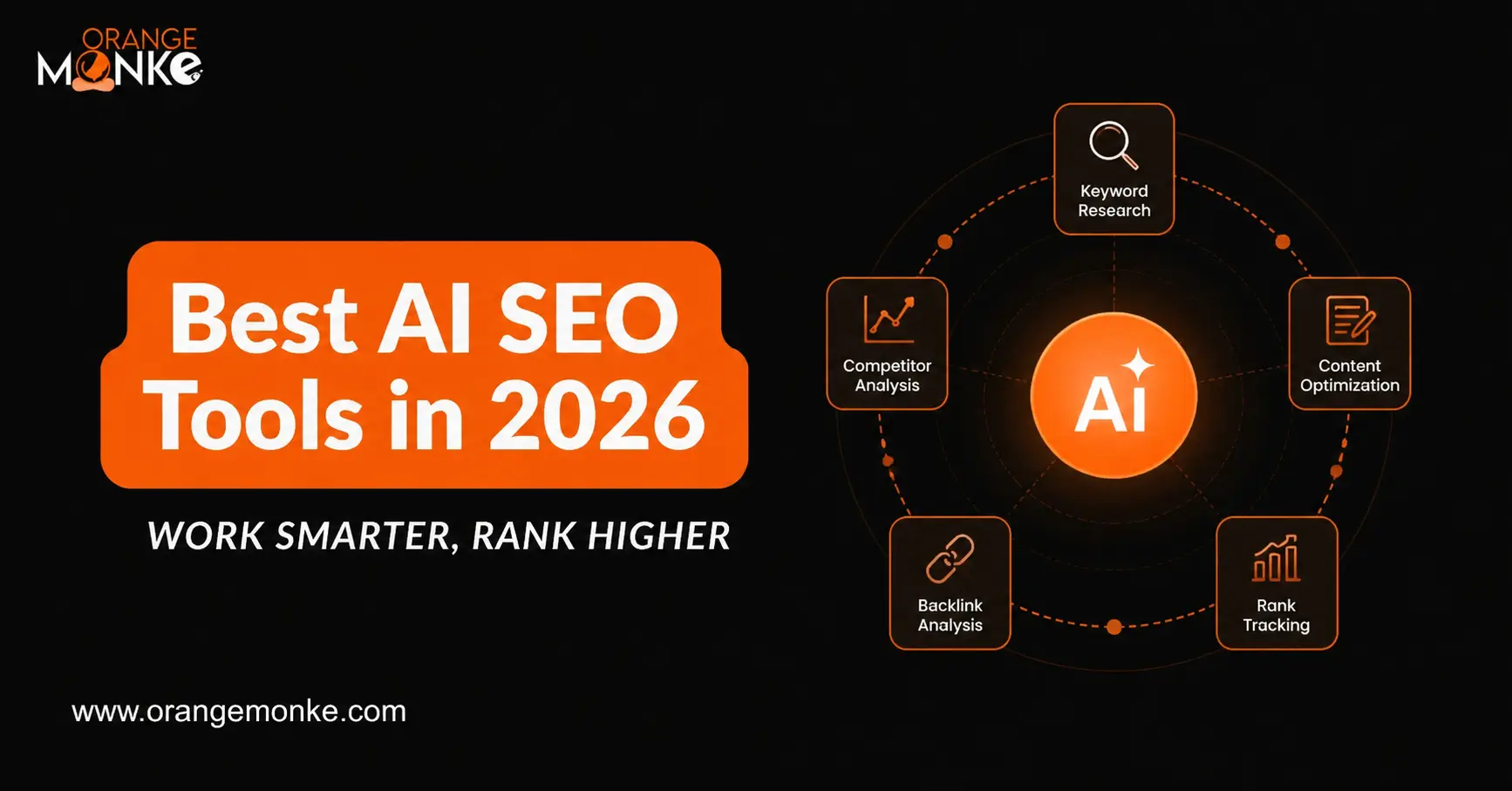
| Quick answer: The best AI SEO tools in 2026 are Semrush and Ahrefs for all-in-one research and competitive intelligence, Surfer SEO, Frase, and Clearscope for content optimization, and Profound, Peec AI, and Otterly.AI for tracking your visibility inside AI search engines like ChatGPT, Perplexity, and Google AI Overviews. There is no single winner for everyone — most teams combine two or three tools to cover research, optimization, and AI visibility. Free options like Google Search Console, Google Analytics 4, and Ubersuggest are enough to get a small website started. |
SEO in 2026 looks very different from SEO three years ago. People no longer just type a query and click a blue link — they ask ChatGPT, Perplexity, and Google AI Mode, and they often get a complete answer without ever visiting a website. That shift has turned a generation of “rank tracking” tools into a new category of AI SEO tools built for keyword research, content optimization, technical audits, and a brand-new job: making sure AI engines actually mention and cite you.
This guide breaks down the best AI SEO tools in 2026 across every job you need to do. Whether you run a small website, an in-house team, or an agency, you’ll find the right AI SEO software for your stage and budget here.
What Are AI SEO Tools?
AI SEO tools are software platforms that use artificial intelligence and machine learning to automate and improve SEO work — keyword research, content optimization, technical audits, rank tracking, and, increasingly, monitoring how your brand appears inside AI search engines. Instead of doing keyword clustering, competitor analysis, or content scoring by hand, you let the tool process search data at scale and surface recommendations in minutes.
The key word is data. The most useful AI tools for SEO don’t just wrap a chatbot in a dashboard, they ground their suggestions in real search data, live SERPs, and large keyword and backlink indexes. That distinction matters, because a tool that simply calls a language model can confidently invent keyword volumes or recommendations that don’t reflect what actually ranks.
In 2026, AI SEO software generally does three jobs:
- Research: keyword discovery, search intent analysis, competitor and backlink intelligence.
- Optimization: content briefs, semantic scoring against top-ranking pages, on-page and technical fixes.
- AI visibility: tracking mentions, citations, and share of voice across ChatGPT, Perplexity, Gemini, Copilot, and Google AI Overviews.
How We Chose These Tools
At Orange MonkE, we use AI SEO tools across client campaigns every day, so this list reflects hands-on experience rather than a feature checklist. We weighed each platform on a few practical factors:
- Data quality: Are keyword volumes, SERP data, and backlinks accurate and fresh, or do they contradict Google Search Console?
- What it actually automates: Does it save real hours, or is it a thin chatbot wrapper?
- AI search readiness: Can it help you win in AI Overviews and answer engines, not just classic blue links?
- Value for money: What you get relative to the monthly cost, including hidden add-ons.
- Who it fits: Solo creators, small businesses, in-house teams, or agencies.
- Pricing in this guide reflects publicly listed plans in 2026 and is meant as a rough guide only. Tool pricing, plan names, and features change often — always confirm the current price on each provider’s official website before buying.
Best AI SEO Tools at a Glance
Here’s a quick comparison of the top AI SEO tools covered in this guide, grouped by what they do best and roughly what SEO cost to start.
| Tool | Best For | Category | Starting Price (Approx.) |
| Semrush | All-in-one SEO and AI visibility tracking | SEO Suite | From ~$139.95/month |
| Ahrefs | Keyword research, backlinks, and Brand Radar | SEO Suite | From ~$129/month (Lite) |
| Surfer SEO | Data-driven content optimization | Content Optimization | From ~$99/month |
| Frase | AI-powered content creation and optimization for small teams | Content Optimization | From ~$45–49/month |
| Clearscope | Premium content quality and relevance optimization | Content Optimization | From ~$170/month |
| Rankability | Content optimization for AI search and modern SEO | Content Optimization | Subscription-based |
| Writesonic | AI writing, research, and content generation | Content & AI | From ~$49/month |
| MarketMuse | Topic clusters, content planning, and strategy | Content Strategy | Free tier; paid from ~$99/month |
| Profound | Enterprise-level AI visibility and brand monitoring | AEO/GEO | Custom enterprise pricing |
| Peec AI | AI visibility analytics for growing businesses | AEO/GEO | From ~€85/month |
| Otterly.AI | Affordable AI search and brand monitoring | AEO/GEO | From ~$29/month |
| Google Search Console | Website indexing and search performance tracking | Analytics & SEO | Free |
| Google Analytics 4 | Traffic, engagement, and behavior analytics | Analytics | Free |
| Ubersuggest | Budget-friendly keyword research and SEO insights | SEO Research | Free / Freemium |
| Keyword Surfer | In-browser keyword volume and SEO data | SEO Research | Free |
Best All-in-One AI SEO Platforms
If you want one platform that covers keyword research, competitor analysis, technical audits, rank tracking, and AI visibility, start here. These are the heavyweight AI SEO software suites that most professional teams build their workflow around.
1.Semrush — Best All-in-One AI SEO Tool
Best for: Agencies & full marketing teams
From:
~$139.95/mo
Category:
Suite
Semrush has grown into a complete digital marketing platform with dozens of tools spanning SEO, PPC, content, local, and competitor intelligence. For most agencies it functions less like a single SEO tool and more like an operating system for the whole search program.
Its AI Toolkit, introduced in 2025 and refined through 2026, adds prompt-level tracking of how your brand shows up across AI search results — including ChatGPT, Perplexity, and Google AI Mode — with daily updates. That makes it one of the few suites where classic keyword tracking and AI visibility live side by side.
Pros
- Deepest all-round toolset on the market
- Strong keyword intent and competitor data
- White-label reporting for agencies
- AI visibility tracking built in
Cons
- Expensive once you add seats and the AI toolkit
- Steep learning curve for beginners
- AI visibility is a separate dashboard, not woven into content workflows
2.Ahrefs — Best for Research, Backlinks & Brand Radar
Best for: Research-heavy teams & link building
From: ~$129/mo (Lite)
Category: Suite
Ahrefs built its reputation on the largest and most frequently updated backlink index in the industry, backed by 15 years of search data and a keyword database in the hundreds of billions. That data foundation is still its biggest advantage in 2026, and everything else sits on top of it.
Its newer AI features matter for modern SEO: Brand Radar monitors how your brand appears across ChatGPT, Perplexity, Gemini, Copilot, Google AI Overviews, and Google AI Mode using prompts derived from real “People Also Ask” data, while the AI Content Helper assists with on-page optimization. Strong keyword research and backlink analysis remain its core strengths.
Pros
- Best-in-class backlink data
- Excellent keyword and content research
- Brand Radar tracks AI visibility across many platforms
- Affordable Starter tier for solo users
Cons
- Brand Radar is a costly add-on on top of a base plan
- Fewer built-in PPC and social features than Semrush
- Credit-style limits can frustrate heavy users
Best AI Content Optimization & Writing Tools
If your bottleneck is content quality — you publish articles but they don’t rank — these AI content optimization tools show you exactly what top-ranking pages contain and help your writers close the gap. They pair well with a research suite like Ahrefs or Semrush.
3.Surfer SEO — Best for Data-Driven Content Optimization
Best for: Content teams optimizing for SERPs & AI
From: ~$99/mo
Category: Content
Surfer SEO grades your draft in real time against the pages already ranking for your target keyword. Its Content Score, NLP-powered term suggestions, outline builder, and internal linking recommendations make it a favorite for turning a thin draft into a comprehensive page.
The same semantic completeness Surfer pushes you toward is exactly what Google’s AI Overviews and Perplexity reward, and it now includes an AI visibility tracker as an add-on. It’s a specialist content tool, though — not a full suite — so you’ll still pair it with Semrush or Ahrefs for research.
Pros
- Clear, actionable content scoring
- Great for briefs and on-page optimization
- Prepares content well for AI search
Cons
- AI tracking costs extra on top of the base plan
- Not a research or backlink tool
- Optimizing to “what ranks” can nudge content toward sameness
4.Frase — Best All-in-One Content Tool for Small Teams
Best for: Small teams (1–5 people)
From:~$45–49/mo
Category: Content
Frase covers the whole content pipeline — research, briefs, AI writing, optimization, GEO scoring, and content monitoring — at an entry price that undercuts most rivals, with AI visibility features included rather than gated behind pricey add-ons. For lean teams that want one affordable tool to take a piece from idea to published and tracked, it’s hard to beat.
Pros
- Full content workflow in one tool
- AI visibility and GEO scoring included
- Very affordable entry plan
Cons
- Lighter research data than Ahrefs or Semrush
- Not built for technical SEO audits
5.Clearscope — Best for Premium Content Quality
Best for: Editorial teams & multi-reviewer workflows
From: ~$170/mo
Category: Content
Clearscope is the polished, editor-friendly choice. Its NLP scoring is mature, the interface is clean, and unlimited seats remove the per-user math that complicates other tools, which makes it ideal for content that goes through multiple review rounds. The trade-off is price: you pay a premium for a core feature set that’s similar to cheaper rivals, and it lacks a dedicated AI citation tracking layer.
Pros
- Excellent, trustworthy content scoring
- Unlimited seats even on the entry tier
- Strong Google Docs and WordPress integrations
Cons
- Pricier than Surfer or Frase for similar core features
- No built-in AI visibility tracking
6.Rankability — Best Content Optimizer for the AI Era
Best for: Agencies wanting workflows, not just data
From: Subscription (check site)
Category: Content
Rankability combines AI visibility tracking with content optimization, auditing, research, and reporting in a single platform aimed at agencies that need to track visibility and turn it into client results. If you want SEO workflows rather than a standalone scoring tool, it earns a place on this list.
Pros
- Optimization plus AI search tracking in one place
- Agency-friendly reporting and workflows
Cons
- Smaller research dataset than the big suites
- Best value only if you use the full workflow
7.Writesonic — Best AI Writing + Research Agent
Best for: High-volume content creation
From: ~$49/mo
Category: Content
Writesonic is an all-in-one content platform where you can research, write, optimize, and publish from one place. Its standout is Chatsonic, an AI SEO agent that lets you task multiple language models with real-time data streaming in from connected SEO tools — useful for speeding up research and drafting. Just note that its more advanced GEO features sit on higher-priced tiers.
Pros
- Fast research-to-draft workflow
- Multi-model AI agent with live data
- Affordable starting plan
Cons
- Advanced GEO features gated on higher plans
- AI drafts still need human editing and fact-checking
8.MarketMuse — Best for Topic Clusters & Content Strategy
Best for: Strategic content planning
From: Free tier; paid from ~$99/mo
Category: Content
MarketMuse focuses on the planning layer — topic clusters, content gap analysis, and a personalized difficulty score that helps teams allocate a limited content budget. Building topical authority across a cluster is exactly what correlates with the entity strength that drives citations in AI answers, so it’s a smart strategic complement to a faster optimizer like Surfer or Frase. A free tier makes it easy to evaluate.
Pros
- Best-in-class topic-cluster planning
- Useful personalized difficulty score
- Free tier for evaluation
Cons
- Slower time-to-content than Surfer or Frase
- Full feature set is expensive
- No direct AI citation tracking
Best AI Search Visibility Tools (AEO & GEO)
This is the category that didn’t exist a few years ago. As buyers increasingly ask AI assistants instead of typing into Google, you need to know whether ChatGPT, Perplexity, Gemini, and Google AI Overviews mention you — and which sources they cite.
9.Profound — Best for Enterprise AI Visibility
Best for: Enterprise brands & large teams
From: Enterprise / custom
Category: AEO/GEO
Profound is widely regarded as the category leader, with significant funding, a high valuation, and enterprise clients. It offers multi-country, multi-language AI visibility, a Conversation Explorer for analyzing share of voice in AI answers, and enterprise-grade reporting and security. If AI visibility is a board-level priority and budget isn’t the constraint, it’s the benchmark.
Pros
- Deepest enterprise AI visibility analytics
- Multi-country and multi-language coverage
- Strong security and reporting
Cons
- Enterprise pricing puts it out of reach for SMBs
- Overkill if you only need basic monitoring
10.Peec AI — Best Mid-Market AI Visibility Analytics
Best for: Agencies & growing brands
From: ~€85/mo
Category: AEO/GEO
Peec AI is one of the strongest pure-play AI search analytics platforms and the most popular mid-market choice. It tracks brand performance across major AI platforms — including ChatGPT, Perplexity, Claude, Gemini, and others — with near real-time data and strong brand-entity tracking, so you can see not just whether you’re mentioned but how AI describes and positions you versus competitors.
Pros
- Excellent brand-entity and competitor tracking
- Near real-time updates
- Reasonable mid-market pricing
Cons
- Pure analytics — you still need a content plan to act on it
- Per-prompt limits on entry plans
11.Otterly.AI — Best Affordable AI Search Monitoring
Best for: SMBs starting with AI visibility
From: ~$29/mo
Category: AEO/GEO
Otterly.AI is the most accessible entry point into AI search monitoring, with an affordable starting plan and a recommendations feature that translates data into clear next steps. It tracks brand mention share of voice across the major AI engines, making it a sensible first tool for a small business that has never measured AI visibility before.
Pros
- Low entry price
- Actionable recommendations, not just data
- Easy for beginners
Cons
- Entry plan limits prompts and engines
- Less depth than Profound or Peec AI for large brands
Best Free AI SEO Tools
You don’t need a big budget to start. These free AI SEO tools and freemium options are enough for a small website to research keywords, fix technical issues, and measure results. If you’re just getting going, our guide on why a website isn’t showing on Google pairs well with these.
Free essentials every site should use
- Google Search Console (free): the single most important free tool — shows what’s indexed, which queries bring clicks and impressions, your average position and CTR, and any crawl or indexing errors.
- Google Analytics 4 (free): tracks how visitors behave on your site — traffic sources, engaged sessions, conversions — so you know what your SEO is actually producing. (See our notes on Google Analytics.)
- Ubersuggest (freemium): beginner-friendly keyword ideas, difficulty, and content suggestions with a free daily allowance and low-cost paid plans.
- Keyword Surfer & Keywords Everywhere (free / low-cost): browser extensions that show search volume and related terms right inside Google results.
- Free tiers of paid tools: MarketMuse and several AI visibility tools (such as Otterly.AI’s low-cost entry plan) let you evaluate before committing.
- General-purpose AI assistants like ChatGPT, Claude, and Gemini are also useful free or low-cost helpers for brainstorming outlines, clustering keywords, and drafting — but treat their output as a starting point, not a source of truth. Always verify volumes and facts against real data, because a language model with no live search data can confidently make things up.
Best AI SEO Tools by Use Case
If you’d rather not wade through every option, here’s the short version by who you are:
For small businesses
Start free with Google Search Console and Google Analytics 4, add Ubersuggest for keyword research, and use Frase for affordable all-in-one content optimization. Add Otterly.AI when you’re ready to measure AI visibility.
For beginners
Keep it simple: Search Console plus a single content optimizer (Frase or Surfer). Learn the fundamentals first — our guide to writing SEO-optimized blog posts that rank will help you use these tools well rather than just paying for them.
For agencies
Semrush or Ahrefs for research and reporting, Surfer or Rankability for content production, and Peec AI or Profound for client-facing AI visibility reporting. White-label reporting is the deciding factor here.
For enterprise brands
Pair a full suite (Semrush or Ahrefs with Brand Radar) with a dedicated enterprise AI visibility platform like Profound or Scrunch AI for multi-market coverage, security, and compliance.
SEO vs AEO vs GEO: What Actually Changed
Traditional SEO measures where your page ranks on Google’s results page. But a brand sitting at position eight on Google might be the first one ChatGPT recommends — or completely absent from the AI answer. That gap is why a whole new tooling category appeared.
SEO (Search Engine Optimization): earning rankings and clicks on classic search results.
AEO (Answer Engine Optimization): being the source an answer engine pulls from when it responds directly.
GEO (Generative Engine Optimization): being mentioned and cited inside AI-generated answers across ChatGPT, Perplexity, Gemini, and Google AI Overviews.
The good news: the fundamentals overlap heavily. Google’s own guidance is that no special markup or “AI files” get you into AI Overviews — strong, well-structured, trustworthy content that satisfies intent is the path. Clear definitions, direct answers near the top of a section, comprehensive coverage, and genuine SEO best practices are what earn citations. The best AI SEO tools in 2026 simply help you measure and execute both jobs at once.
How to Choose the Right AI SEO Tool
Don’t start with the leaderboard — start with your bottleneck. Ask which job is actually holding you back, then pick the tool that solves it:
- Identify your weakest link. Is it research (what to target), production (content that ranks), or visibility (AI mentions)? Buy for that first.
- Check data accuracy. If a tool’s keyword volumes are consistently off by more than 15–20% from Google Search Console, or its advice contradicts your own data, move on.
- Watch for add-on pricing. AI visibility tracking is frequently a paid extra on top of a base plan — factor in the true total, not the headline price.
- Test your existing suite first. If you already pay for Semrush or Ahrefs, try its AI visibility features before adding a separate tool.
- Favor trends over snapshots. AI answers vary, so choose tools that show movement over time, not one-off readings.
- Most teams land on a stack of two or three tools — one for research, one for content, and one for AI visibility — rather than forcing a single platform to do everything.
Can AI SEO Tools Replace an SEO Expert?
No, AI SEO tools are powerful accelerators, but they automate tasks, not judgment. They can’t set strategy, protect your brand voice, fact-check their own output, or supply the real experience and expertise (E-E-A-T) that both Google and AI engines reward. Many tools marketed as “AI SEO” are little more than a chatbot with a subscription; the ones worth paying for ground their output in real search data, and even those still need a human to decide what matters.
This is exactly where an experienced partner earns its keep. At Orange MonkE, we combine the best AI SEO tools with human strategy — turning tool data into content, technical fixes, and AI-visibility wins that actually move rankings and revenue. The tools find the signal; the strategy decides what to do with it.
Conclusion
The best AI SEO tools in 2026 aren’t about finding one magic platform; they’re about assembling the right stack for your stage. Use a research suite like Semrush or Ahrefs to know what to target, a content optimizer like Surfer, Frase, or Clearscope to produce pages that rank, and an AI visibility tool like Profound, Peec AI, or Otterly.AI to make sure AI search engines mention and cite you. Small sites can do a lot with free tools like Google Search Console and Ubersuggest before spending a rupee.
Whatever you choose, remember that tools surface the opportunity — execution wins the ranking. That’s where Orange MonkE comes in: we help businesses pick the right AI SEO software, then put it to work with strategy, content, and technical SEO that delivers lasting visibility across both Google and AI search.
Frequently Asked Questions
What are AI SEO tools?

AI SEO tools are software platforms that use artificial intelligence and machine learning to automate and improve SEO tasks such as keyword research, content optimization, technical audits, rank tracking, and monitoring brand visibility inside AI search engines like ChatGPT, Perplexity, and Google AI Overviews.
What is the best AI SEO tool in 2026?
There's no single best tool for everyone. Semrush and Ahrefs lead for all-in-one research and competitive intelligence, Surfer SEO and Frase lead for content optimization, and Profound, Peec AI, and Otterly.AI lead for AI search visibility tracking. Most teams combine two or three tools to cover research, optimization, and AI visibility.
Are there free AI SEO tools?
Yes. Google Search Console and Google Analytics 4 are free and essential. Ubersuggest, Keyword Surfer, Keywords Everywhere, and the free tiers of tools like MarketMuse and Otterly.AI let a small website start with little or no budget.
What is the best AI SEO tool for small businesses?
For most small businesses, the best value stack is free Google tools (Search Console and Analytics) plus Ubersuggest for keyword research and Frase for affordable all-in-one content optimization. Add an affordable AI visibility tool like Otterly.AI once you're ready to measure how AI engines mention your brand.
Can AI SEO tools replace an SEO expert?
No. AI SEO tools speed up research, optimization, and reporting, but they can't replace human judgment for strategy, brand voice, fact-checking, and the experience and expertise signals (E-E-A-T) that Google and AI search engines reward. The best results come from pairing strong tools with human strategy.
What is the difference between SEO and AEO or GEO?
Traditional SEO optimizes for ranking positions on Google's results page. AEO (Answer Engine Optimization) and GEO (Generative Engine Optimization) optimize for being mentioned and cited inside AI-generated answers from ChatGPT, Perplexity, Gemini, and Google AI Overviews. In 2026, most leading AI SEO tools help with both at once.